Infrared Paint & Coating Drying
Infrared heaters that dry paints, lacquers and coatings quickly, with energy going into the coating rather than the air.

Why infrared dries coatings faster
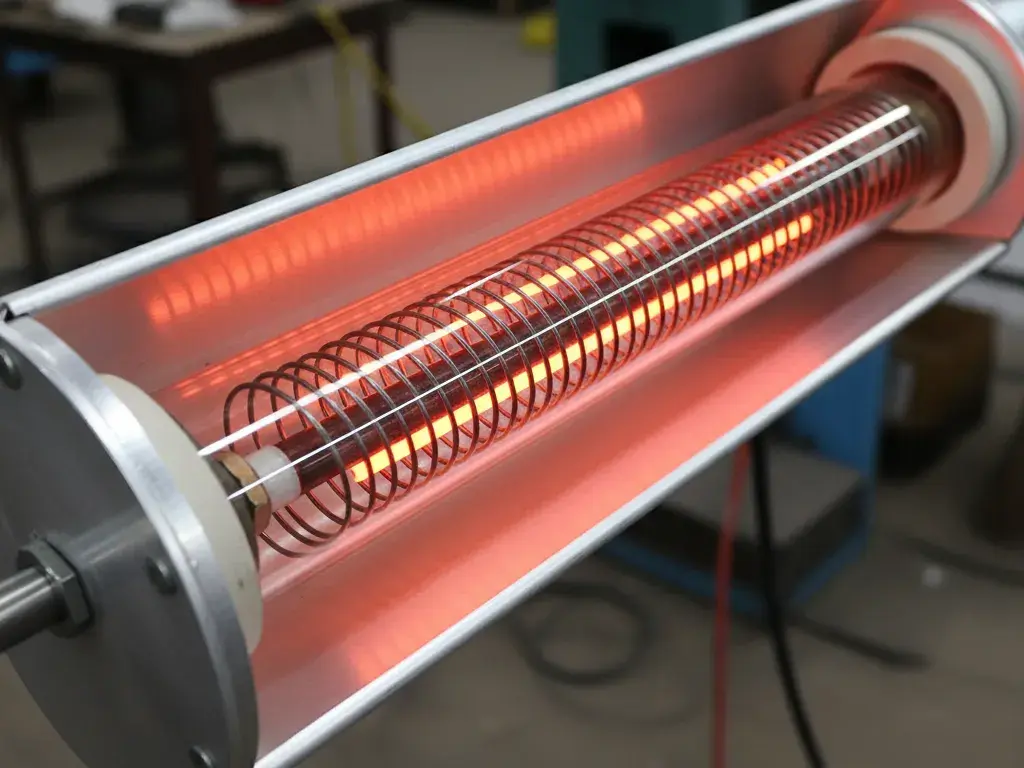
Infrared radiation transfers energy directly into the wet coating and the surface beneath it, instead of first heating a large volume of air. Drying starts within seconds of switching on, ovens can be shorter, and parts cool down faster afterwards.
- Fast start-up, no long oven warm-up
- Energy focused on the coated surface
- Compact drying zones that fit into existing lines
- Zone and power control for different parts and colours
Water-based coatings need the right wavelength
Water absorbs infrared very strongly at about 3 µm and again near 6 µm. Medium wave and carbon emitters, which radiate close to this range, therefore evaporate water from water-based paints, inks and adhesives very efficiently. Shortwave emitters penetrate deeper and suit thick coatings and metal substrates where the heat should also reach the part.
For solvent-based coatings, a gentle start (to let solvents flash off) followed by higher power avoids blistering. Infrared zones can be set up exactly this way.
Typical uses
Infrared drying is used across many coating lines, for example:
- Drying primers and paints on metal components and sheet
- Lacquer drying on wood panels and furniture parts
- Coatings on plastics and glass
- Drying of adhesives and release coatings before lamination
- Spot repair and pre-heating in automotive refinishing
Which infrared heater fits?
| Heater type | Wavelength & response | Best for |
|---|---|---|
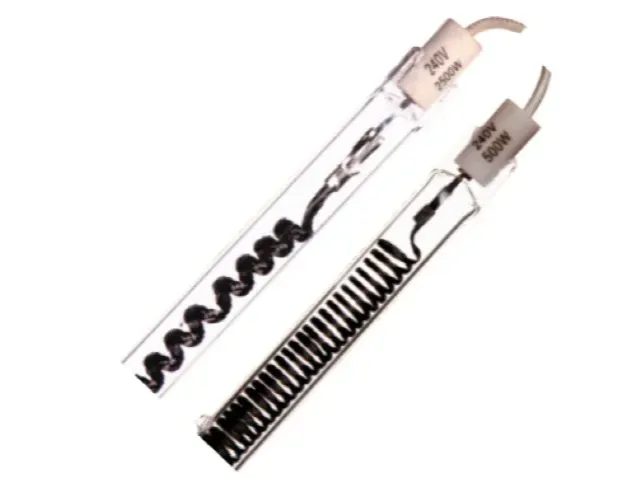
| Medium wave quartz (IR-B) | Peak about 2.4–2.8 µm, full power in about a minute | Water-based paints and coatings, plastics, wood |
| Carbon / fast medium wave | Peak about 2 µm, full power in 1–2 s | Water-based coatings where fast on/off control is needed |
| Shortwave quartz (IR-A) | Peak about 1.0–1.4 µm, full power in 1–2 s | Thick coatings, metal parts, high line speeds |
| Ceramic (IR-C, long wave) | Peak about 3–5 µm, heats up in several minutes | Gentle, even drying in batch or slow processes |
Wavelengths are typical values for each emitter type.
Recommended products



Frequently asked questions
Which infrared heater is best for water-based paint?
Medium wave and carbon infrared heaters, because water absorbs strongly at the wavelengths they emit, so the water evaporates efficiently without overheating the substrate.
Can infrared drying be added to an existing paint line?
Yes. Infrared modules are compact and can be installed as an additional zone before or inside an existing oven to shorten drying time or increase line speed.
Does infrared drying cause blistering?
Not when the power profile is set correctly. A lower-power flash-off zone followed by higher power lets solvents and water escape before the surface closes.
Can infrared dry coatings on plastic or wood?
Yes. Medium wave and ceramic emitters give gentle surface heating that suits heat-sensitive substrates such as plastics and wood.
Related
Other applications
Tell us about your process
Share the material, line speed and the heater or lamp you use today. Our engineers in Chennai will recommend the right infrared solution.