Infrared Lamps for PET Preform Heating & Stretch Blow Moulding
Shortwave infrared lamps that bring PET preforms evenly to blowing temperature, cycle after cycle.
Why preform heating decides bottle quality
In stretch blow moulding, every preform passes a bank of infrared lamps before it is stretched and blown. The preform wall has to reach a uniform temperature through its full thickness, typically somewhere around 95–120 °C for PET, with a defined profile from neck to base. If one zone is too cold the bottle shows thin walls, pearlescence or bursts; too hot and the material crystallises and turns hazy.
Because the lamps are switched in zones and every machine runs thousands of preforms an hour, the lamps themselves must deliver the same output for their whole service life and fit the oven holders exactly. A lamp that sits a few millimetres out of position changes the heating profile of every preform that passes it.
Why shortwave infrared is used for PET
Shortwave infrared (peak around 1.0–1.4 µm) partly penetrates amorphous PET instead of being absorbed only at the surface. That lets the energy heat the preform wall through its thickness, which is what an even stretch needs. Shortwave lamps also reach full output within about a second, so the machine control can trim each zone in real time as speed or ambient conditions change.
- Through-heating of the preform wall instead of surface overheating
- Fast response for zone-by-zone profile control
- High power density in a compact oven
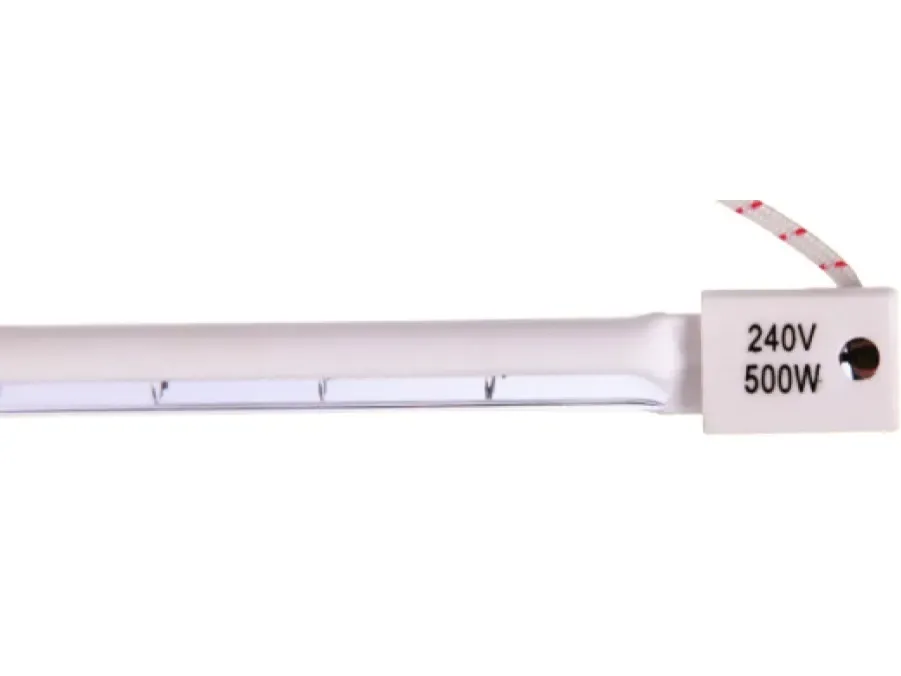
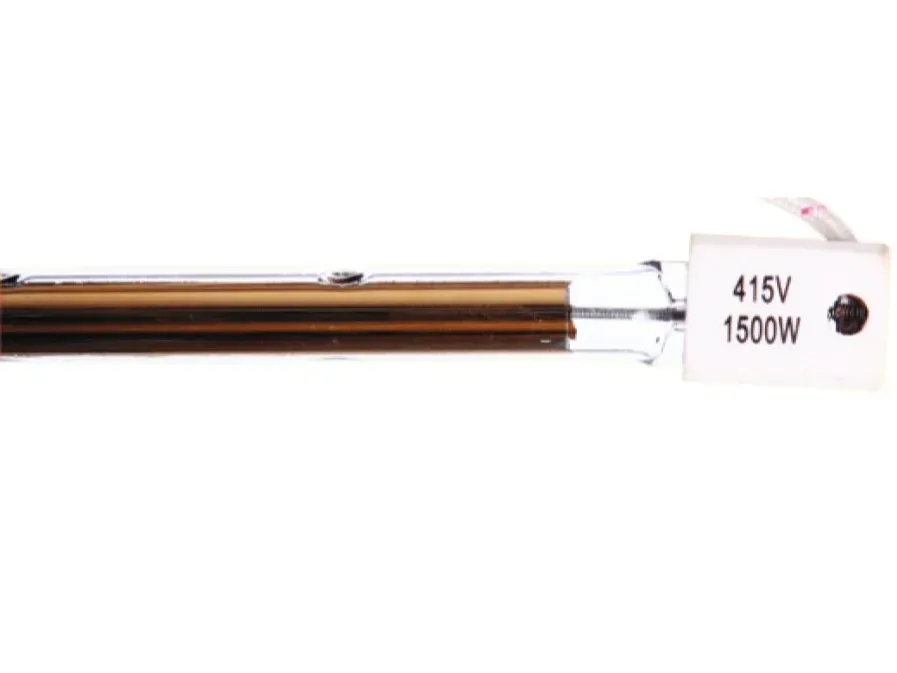
- Reflector coatings (gold or white) return radiation to the preform and reduce losses
Choosing the right lamp
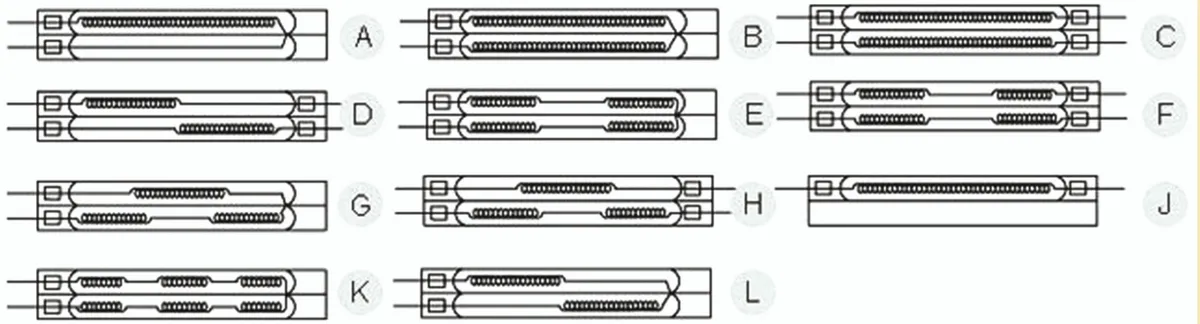
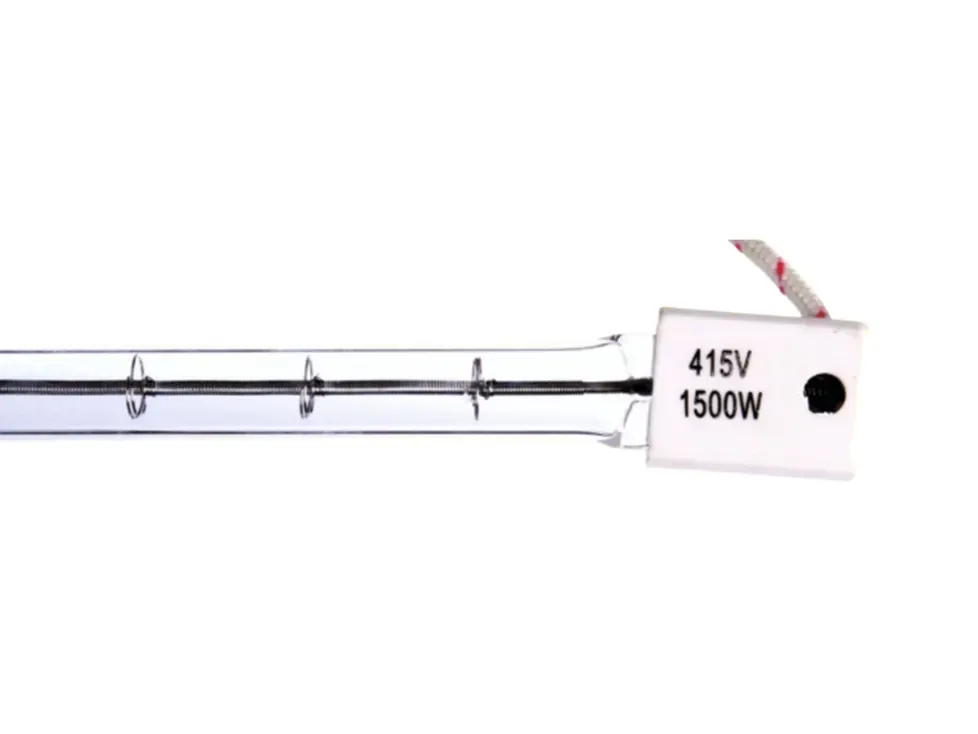
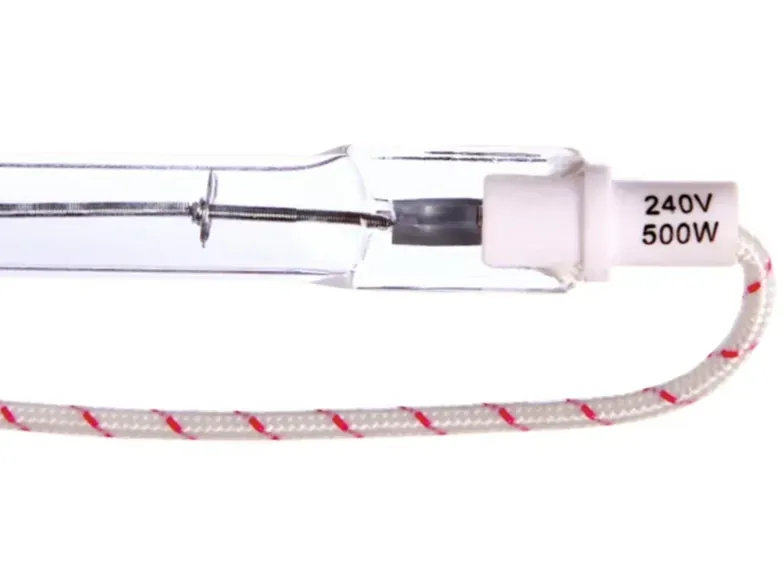
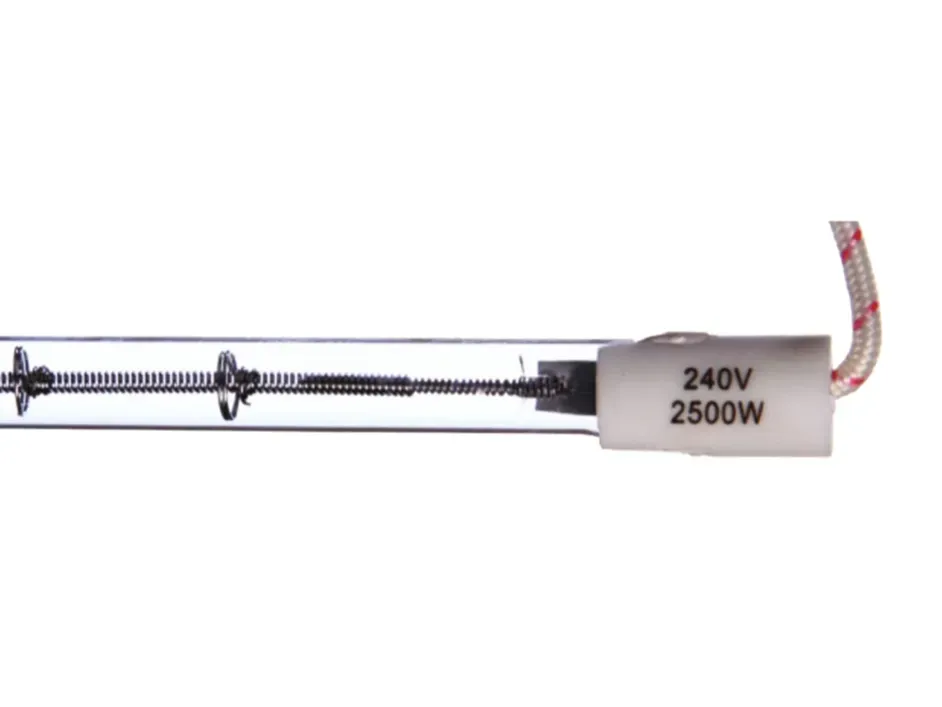
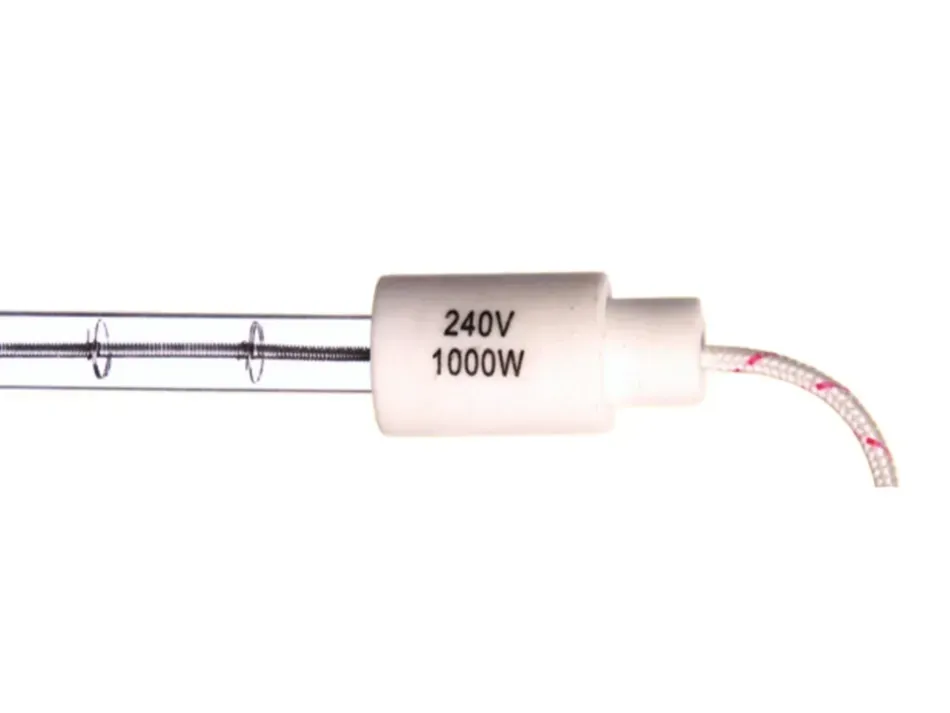
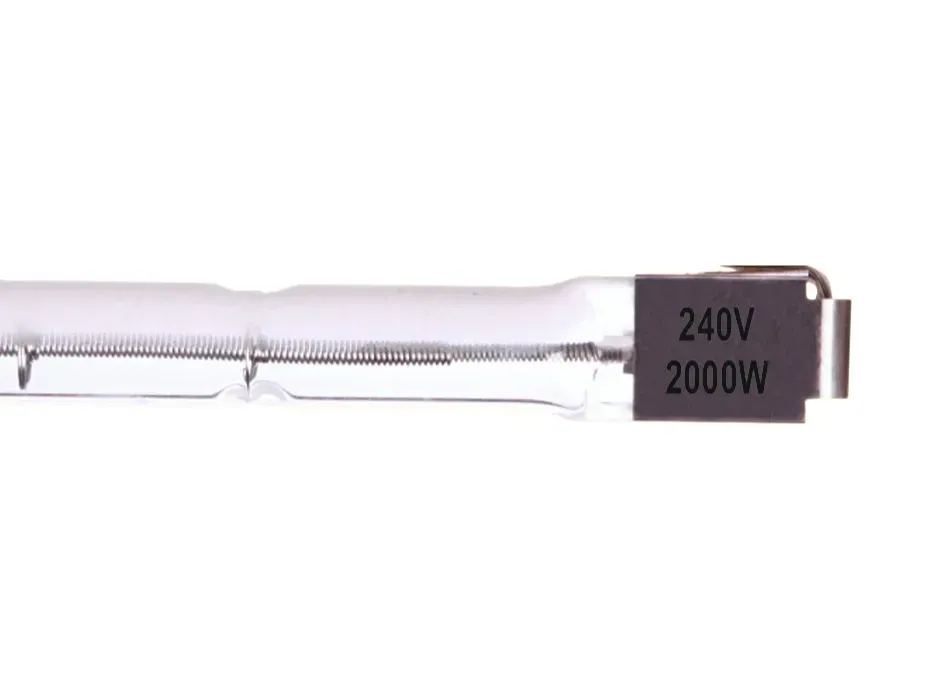
Blow moulding machines use different lamp formats: rectangular or round ceramic caps, metal caps with nickel lead wires, rod or clip holders, and lamps with gold or white ceramic reflector coating. The heated length, overall length, wattage and voltage must match the oven exactly. We supply the formats listed below in many lengths and ratings; the size tables on each product page list the standard models.
If your machine needs a format that is not listed, send us the old lamp or its drawing: we make lamps to the dimensions of the original.
Getting a long lamp life
Most early lamp failures in preform ovens come from mechanical stress and overheated end caps rather than from the filament itself. Correct clamping, enough cooling air at the caps and clean reflectors make the largest difference to service life. Our article on precision fitting explains the common causes in detail.
Which infrared heater fits?
| Heater type | Wavelength & response | Best for |
|---|---|---|
| Shortwave quartz (IR-A) | Peak about 1.0–1.4 µm, full power in 1–2 s | Standard for PET preform ovens: penetrates the wall, fast zone control |
| Carbon / fast medium wave | Peak about 2 µm, full power in 1–2 s | Rarely used for PET; suited to surface heating of thin films |
| Medium wave quartz (IR-B) | Peak about 2.4–2.8 µm, full power in about a minute | Too slow and surface-heavy for preform ovens |
Wavelengths are typical values for each emitter type.
Recommended products
Frequently asked questions
Which infrared lamps are used in PET blow moulding machines?
Preform heating ovens use shortwave quartz infrared lamps, usually with ceramic end caps and often with a gold or white reflector coating. The exact format (cap type, heated length, overall length, wattage and voltage) depends on the machine.
Can you supply lamps that match my existing blow moulding machine?
Yes. Send the dimensions, wattage and voltage of your current lamp, or the lamp itself, and we will match the format. Standard sizes are listed on the product pages.
What is the difference between gold-coated and white-coated lamps?
Both coatings act as a reflector that sends radiation back towards the preform. Gold reflects infrared very efficiently; white ceramic coatings are robust at high temperatures. The right choice depends on the oven design and the original lamp specification.
Why do preform heating lamps fail early?
The most common causes are mechanical stress from incorrect clamping, overheated end caps due to insufficient cooling, and contaminated reflectors. Correct fitting usually extends lamp life considerably.
Related
Other applications
Tell us about your process
Share the material, line speed and the heater or lamp you use today. Our engineers in Chennai will recommend the right infrared solution.