Why the exact match matters
Infrared lamps in machines sit in fixed holders and are wired in zones. A lamp that is a few millimetres longer will not fit or will be stressed in its clamps; a different heated length changes where the heat lands on the product; a different wattage or voltage changes the zone power and can overload the controller. Most early lamp failures trace back to one of these mismatches or to incorrect fitting.
The dimensions to measure
| Dimension | What to measure | Tip |
|---|---|---|
| OL – overall length | From the outer end of one cap to the outer end of the other | Measure the lamp, not the holder spacing |
| HL – heated length | The length of the filament section that glows | Visible as the coiled or straight filament inside the tube |
| OD – outer diameter | The diameter of a round quartz tube | Use a calliper; common sizes include 10, 12, 15 and 19 mm |
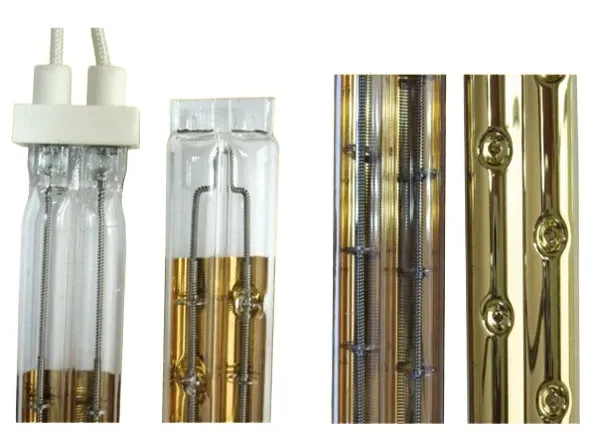
| Twin-tube cross-section | Width × height of a twin tube | Typical sizes are 11 × 23 mm and 15 × 33 mm |
| Lead wires | Length and type of the connection wires, if any | Note the insulation (bare nickel, glass fibre sleeve) |
Identify the end caps and holders
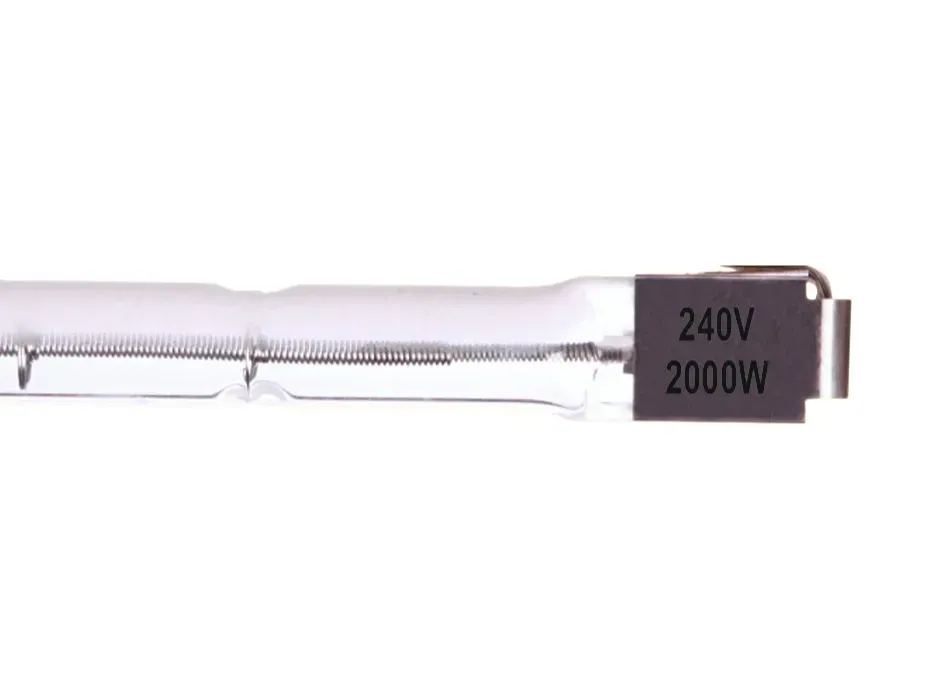
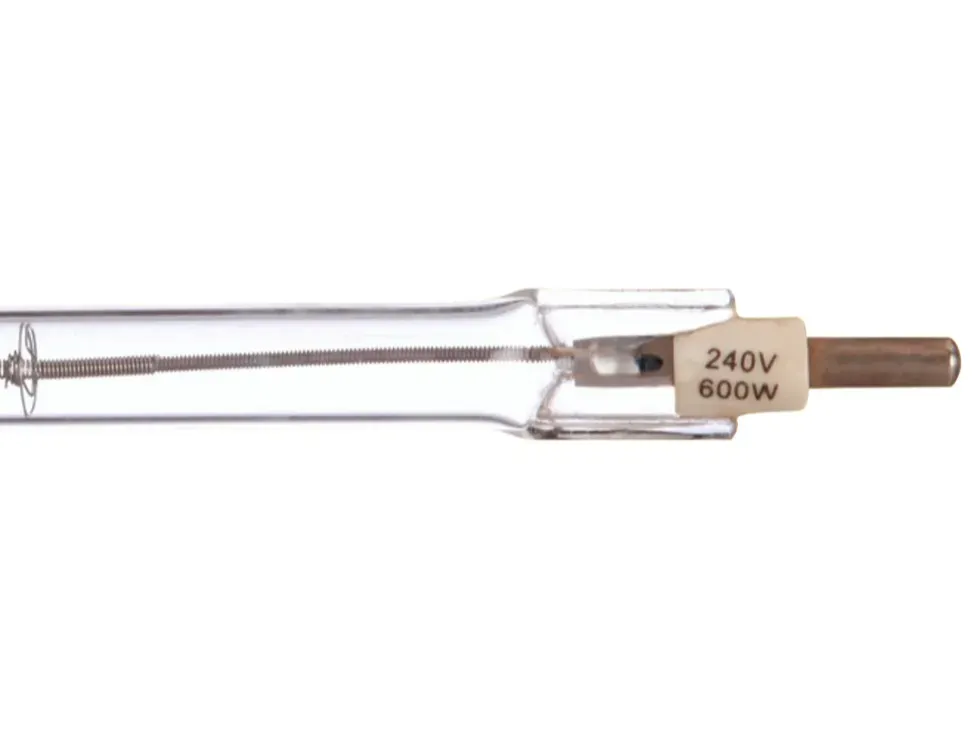
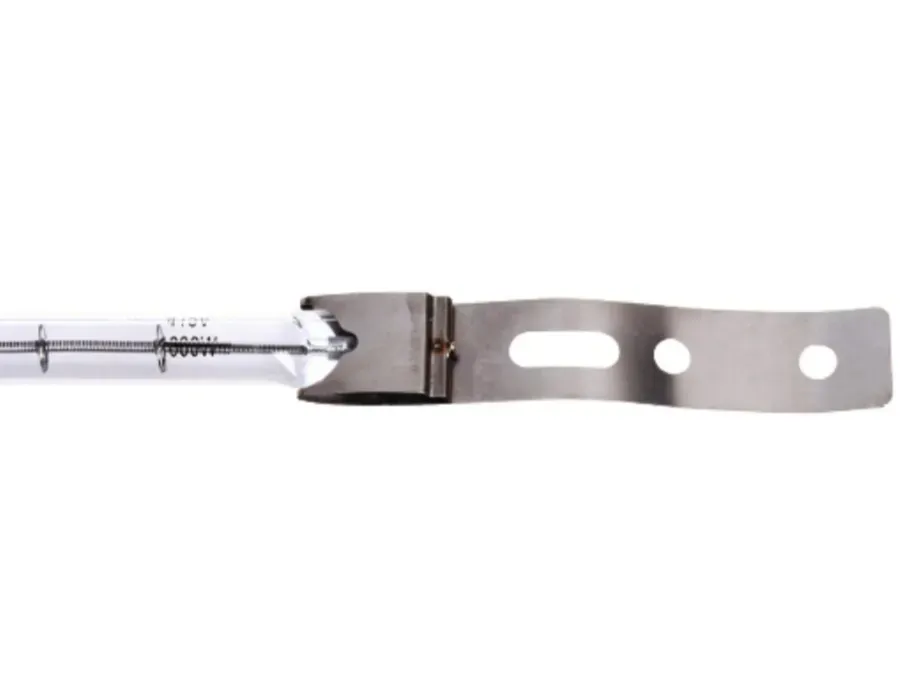
The end cap determines how the lamp is mounted and connected. Compare yours with the common types below; each links to the matching product with its standard sizes.
- Rectangular ceramic cap
- Small or big round ceramic cap
- Double round ceramic cap
- Metal cap with bare nickel lead wires
- Metal rod-type or clip-type holder
Check the electrical rating
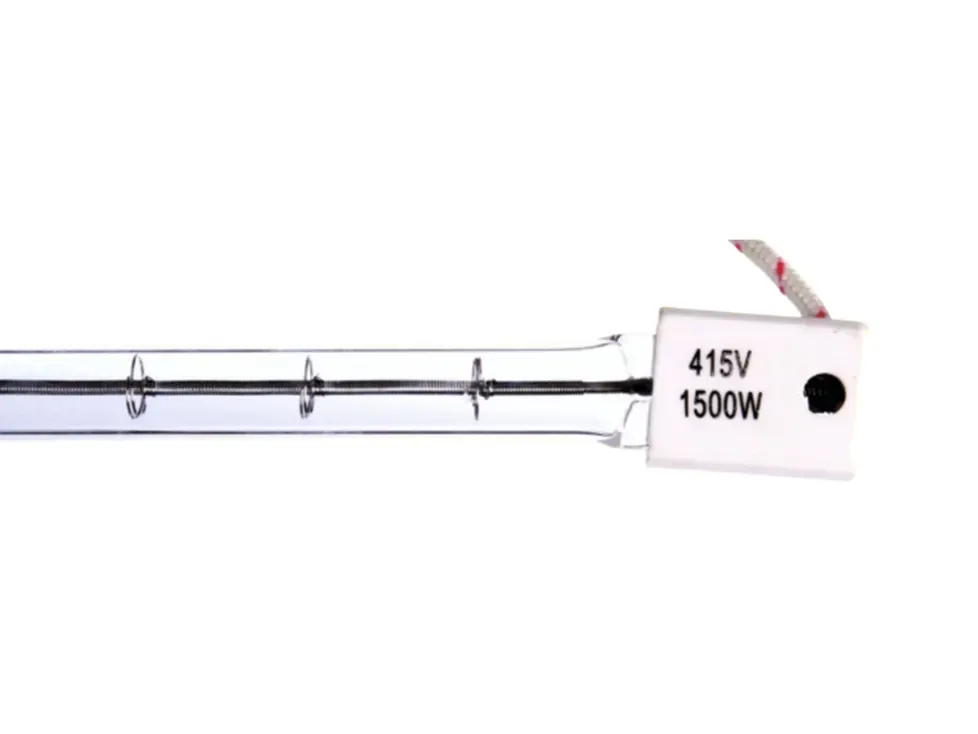
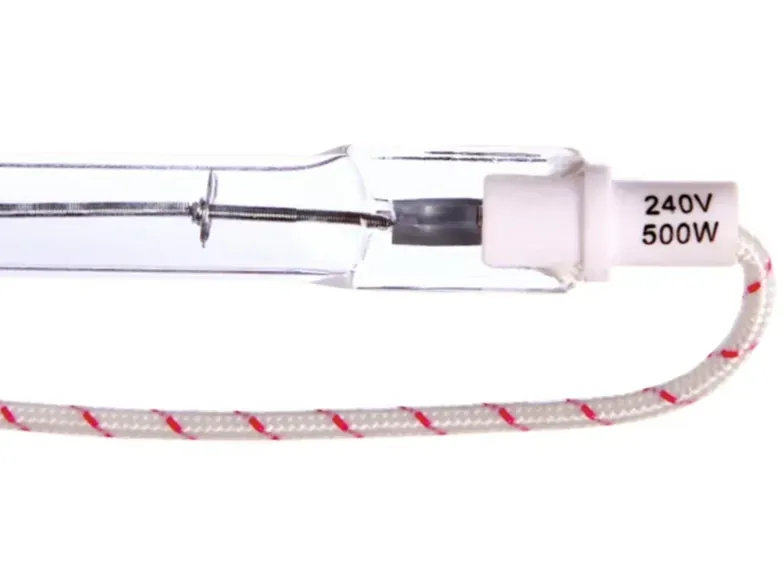
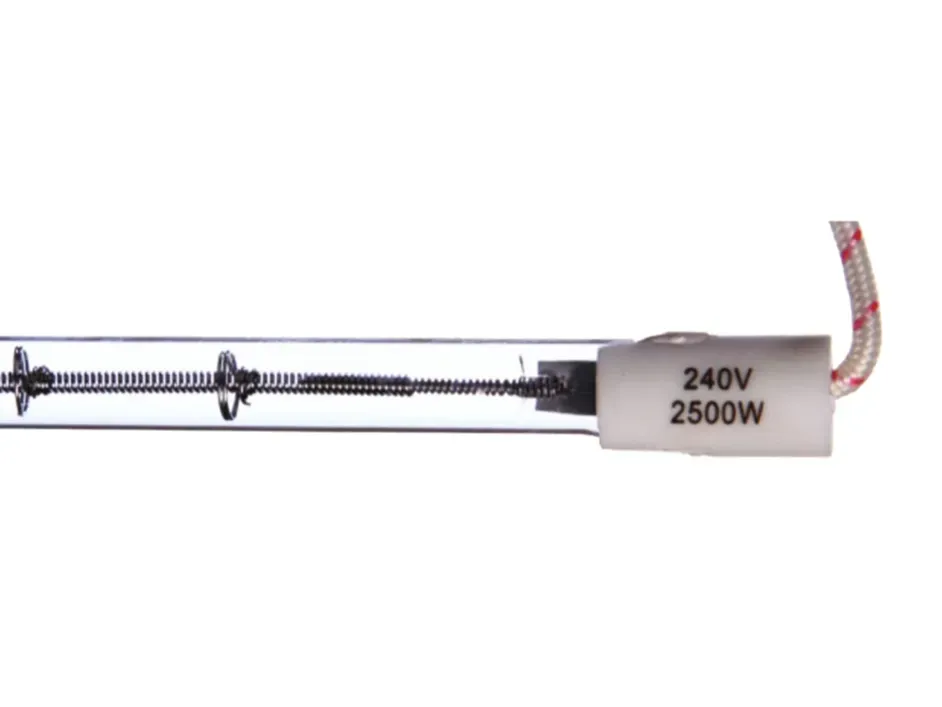
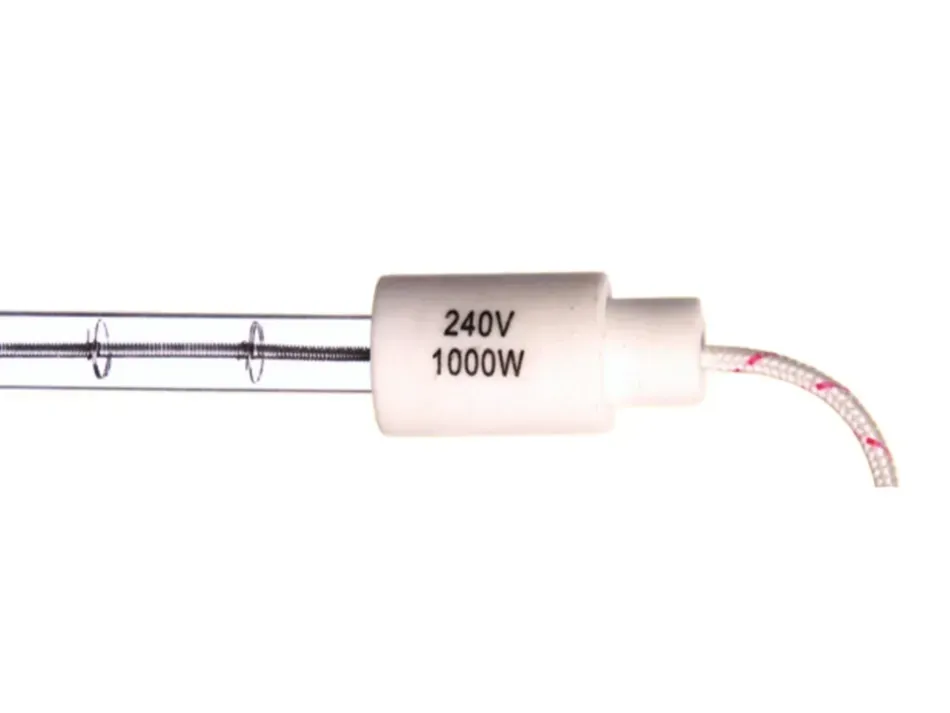
Wattage and voltage are usually printed on the cap or the quartz tube, for example 2000 W 240 V. Never replace a lamp with one of a different voltage: lamps in machines are often wired in series or across phases (for example 415 V), and the wrong voltage either burns the lamp out or leaves the zone short of power. If the marking is unreadable, the machine manual or the zone controller settings usually state it.
Coating, colour and filament
Many process lamps have a reflector on the back of the tube: gold coating, or a white ceramic coating that tolerates very high temperatures. Some lamps use a ruby red tube to reduce glare. The filament may be tungsten (shortwave), carbon (fast medium wave) or a special shape such as a star-shaped filament. Order the same coating and filament type as the original, unless you are deliberately changing the process.
What to send for a quote
With these details we can match a standard lamp or make one to the dimensions of the original.
- A photo of the whole lamp and a close-up of the end cap and marking
- Overall length, heated length and tube diameter or twin-tube size
- Wattage and voltage
- Coating (clear, gold, white, ruby) and filament type if known
- Machine make and model, and the quantity you need
Related products
Frequently asked questions
What is the difference between overall length and heated length?
Overall length (OL) is the complete lamp from cap end to cap end. Heated length (HL) is only the filament section that glows and produces the heat.
Can I use a lamp with a higher wattage as a replacement?
Only if the zone controller, wiring and the process can handle the extra power. Usually the replacement should have the same wattage and voltage as the original.
Where do I find the voltage and wattage of an infrared lamp?
It is normally printed on the ceramic cap or etched on the quartz tube near the end. Otherwise check the machine manual or the controller settings for that zone.
Can you make a lamp to match an obsolete original?
Yes. Send the original lamp or its dimensions, cap type and rating, and we will make a lamp to match.